Quick answer
An automatic pool cover should be designed with the pool, coping and deck from the beginning. It affects pool geometry, track placement, cover-box elevation, drainage, electrical routing, water level and service access.
A stone lid can make the housing blend into the patio, but the lid still has to remain correctly supported, removable and practical to service.
What an automatic cover does
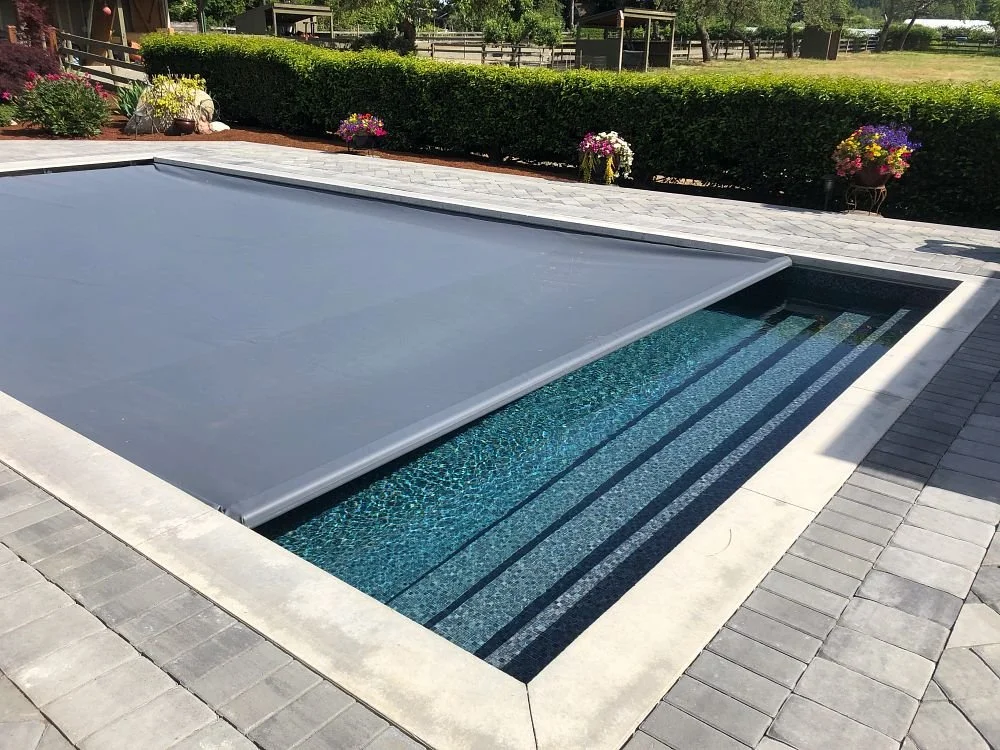
With controlled operation, the cover moves across tracks to close over the water or retract into a recessed housing. Depending on use and conditions, it can reduce debris, evaporation and heat loss while adding a substantial protective layer.
It remains a mechanical system with fabric, moving parts and operating rules. Owners must follow the exact manufacturer instructions and maintain the rest of the pool-safety plan.
The main system parts
- Motor and drive mechanism.
- Tracks and track supports.
- Cover fabric and leading edge.
- Recessed housing or mechanism space.
- Lid tray and structural support.
- Drainage, electrical supply and service access.
- Keyed or otherwise controlled operation.
Pool shape and track planning
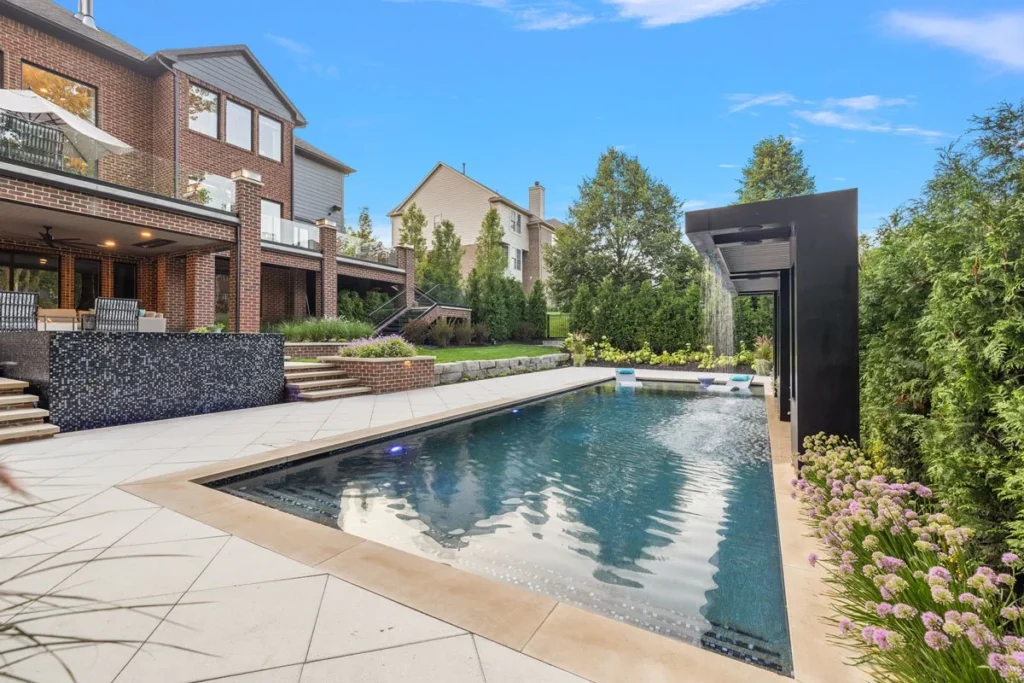
The fabric travels in a straight, controlled path. Raised walls, spas, water features, unusual coping and freeform geometry can complicate that path. A cover may still be possible, but the pool and surrounding details must be developed around the exact system.
Waiting until the shell or deck is built can leave visible tracks, awkward transitions or no suitable location for the housing.
Stone-lid integration
A stone lid continues the surrounding paving over the recessed cover box. The tray, stone thickness, weight, reinforcement, joints and lifting method must suit the exact manufacturer assembly.
The lid should align with adjacent coping and paving while remaining removable. Oversized or fragile pieces may look clean at installation but become difficult to handle during service.
Housing drainage
Rain, splash-out and wet cover fabric can introduce water into the housing. The box needs a dependable drainage route that works with the site elevations and remains accessible for inspection.
On a sloped North Atlanta property, the cover box also needs protection from surrounding runoff. A beautiful stone lid over a wet, inaccessible housing is not a successful installation.
Water level supports the cover
The pool water supports the fabric under load. Water that is too low can leave the cover without the intended support. Heavy rain, snow, debris or standing water on top must be handled according to the manufacturer’s operating instructions.
Owners should learn the proper water level, cover-pump procedure where applicable, cleaning method and conditions when the system should not be operated.
Operation and everyday use
The control should be positioned so the operator can observe the pool while the cover moves. The pool should be checked for people, objects and obstructions before operation. The cover should never be treated as a routine walking surface.
Fabric condition, tracks, ropes, pulleys, leading edge and housing should be inspected as directed. Small operating changes are easier to address before they become a failed opening or closing cycle.
Safety and code language
Use the current listing, ASTM information and manufacturer documentation for the exact model. Whether a cover satisfies a particular barrier requirement depends on the installed system, local rules and approved application. A cover does not make the pool risk-free or replace responsible supervision.
Questions to answer during design
- Is the pool geometry compatible with the intended track arrangement?
- Where will the housing and motor be serviced?
- How will water leave the cover box?
- Can the stone-lid pieces be removed safely?
- How do coping, spa and water features affect the cover path?
- Where will the control and electrical supply be located?
- Who will explain operation and ongoing inspection to the owner?
Next step
Review Planning a Pool House if structures are near the pool and Pool Equipment and Automation Care. Then coordinate the cover with the pool geometry, coping and deck before construction.